%% tags: #Omnivore #type/tweets #aoi/décarbonation #cat/forêt%%
---
How to almost double woodland carbon overnight
===
- After more than five years of work: our new publication on how to almost double woodland carbon overnight; or, when models work a bit too well.
Full paper: https://t.co/m7x2Gs3Ktm
[1/10]
 ([View Tweet](https://twitter.com/kimcalders/status/1605082107532914688))
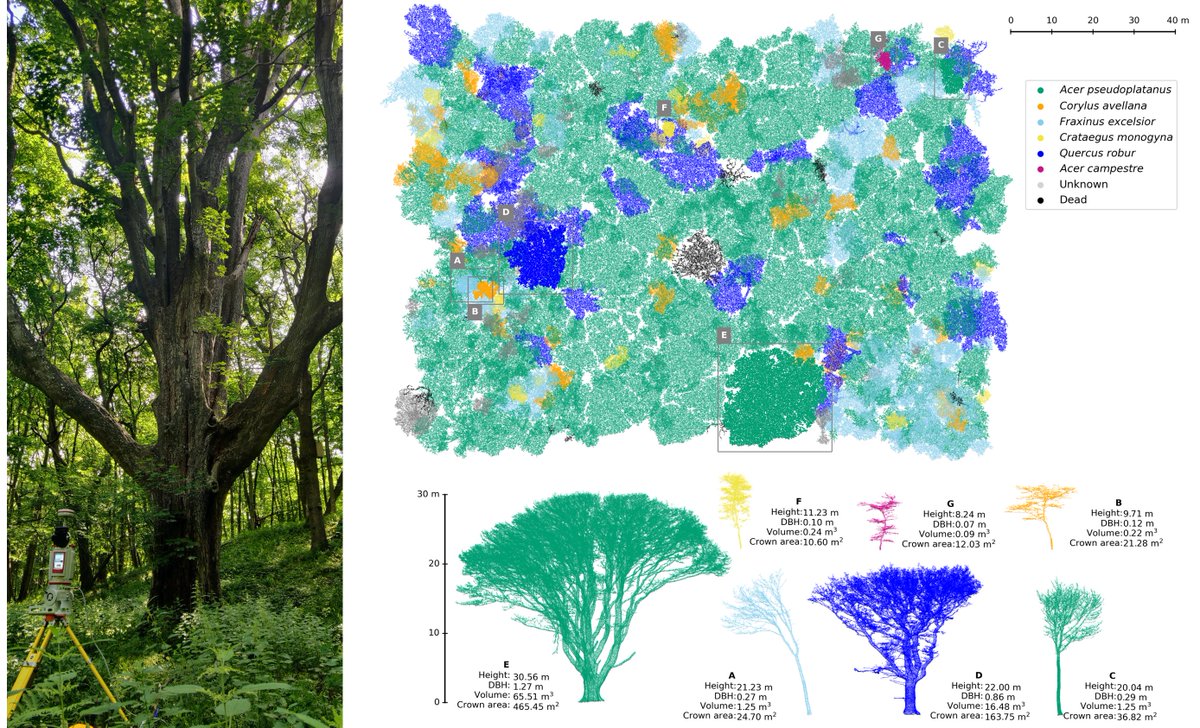
- We used 3D laser measurements across the full range of tree size and shape in a typical UK temperate forest, and show that its carbon 1.77 times more than current allometric model estimates.
[2/10]
 ([View Tweet](https://twitter.com/kimcalders/status/1605082114193444864))
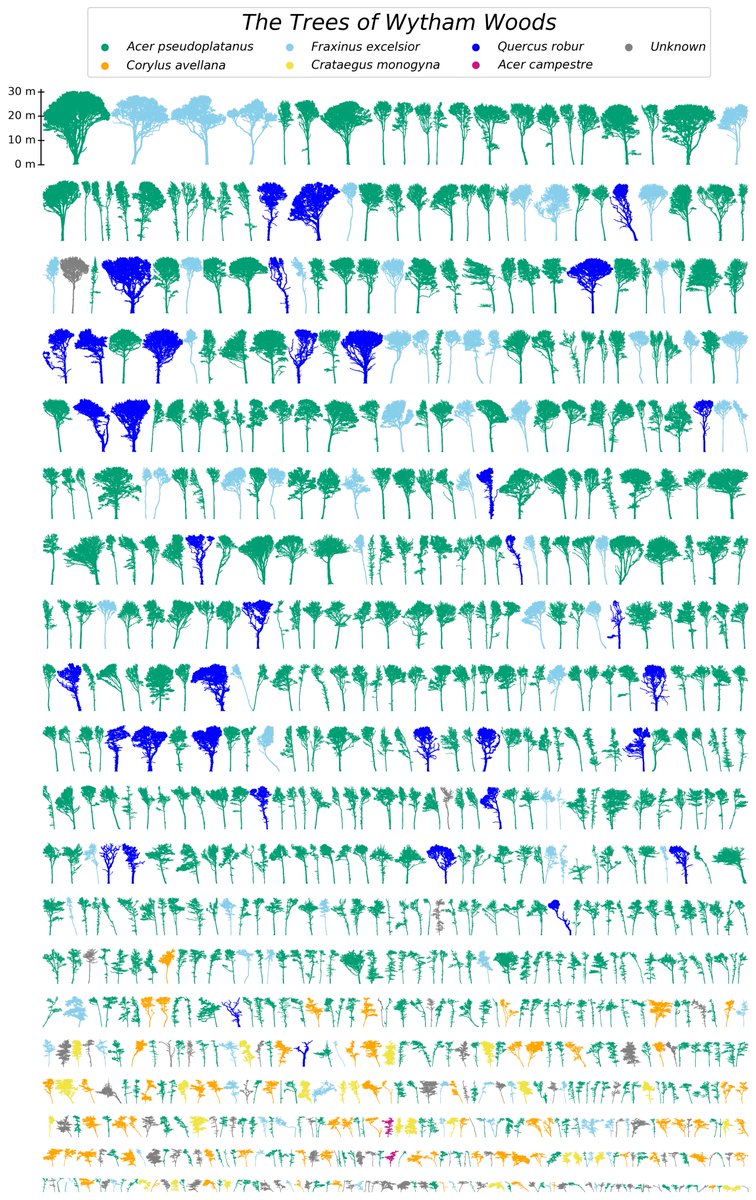
- This discrepancy arises partly from the bias towards small trees in allometric model calibration: 50% of AGB in this forest was in less than 7% of the largest trees, all larger than the trees used to calibrate the widely-used allometric model.
[3/10]
 ([View Tweet](https://twitter.com/kimcalders/status/1605082119302021122))
- We present new empirical evidence that the fundamental assumption of tree size-to-mass scale-invariance is not well-justified for this kind of forest. This leads to substantial biases in current biomass estimates of broadleaf forests.
[4/10]
 ([View Tweet](https://twitter.com/kimcalders/status/1605082127028015104))
- Where the same or similar allometric models are applied, we anticipate similar results due to overdependence on non-representative calibration data, and the departure of observed tree size-to-mass from simple size-invariant relationships.
[5/10]
 ([View Tweet](https://twitter.com/kimcalders/status/1605082133315440641))
- Why are allometric models often extrapolated beyond their original calibration data? We suggest partly because they may seem effective in certain circumstances that testing their limits is overlooked, as it requires difficult and time-consuming destructive tree sampling.
[6/10]
 ([View Tweet](https://twitter.com/kimcalders/status/1605082138315051009))
- Testing the underlying assumptions of allometric models more generally is an urgent priority as this has wider implications for climate mitigation through carbon sequestration. We make recommendations on how to address these uncertainties.
[7/10] ([View Tweet](https://twitter.com/kimcalders/status/1605082140437266433))
- For transparency - all our data, code and analysis are publicly available through https://t.co/dVRwS9gTZb
[8/10] ([View Tweet](https://twitter.com/kimcalders/status/1605082142668718088))
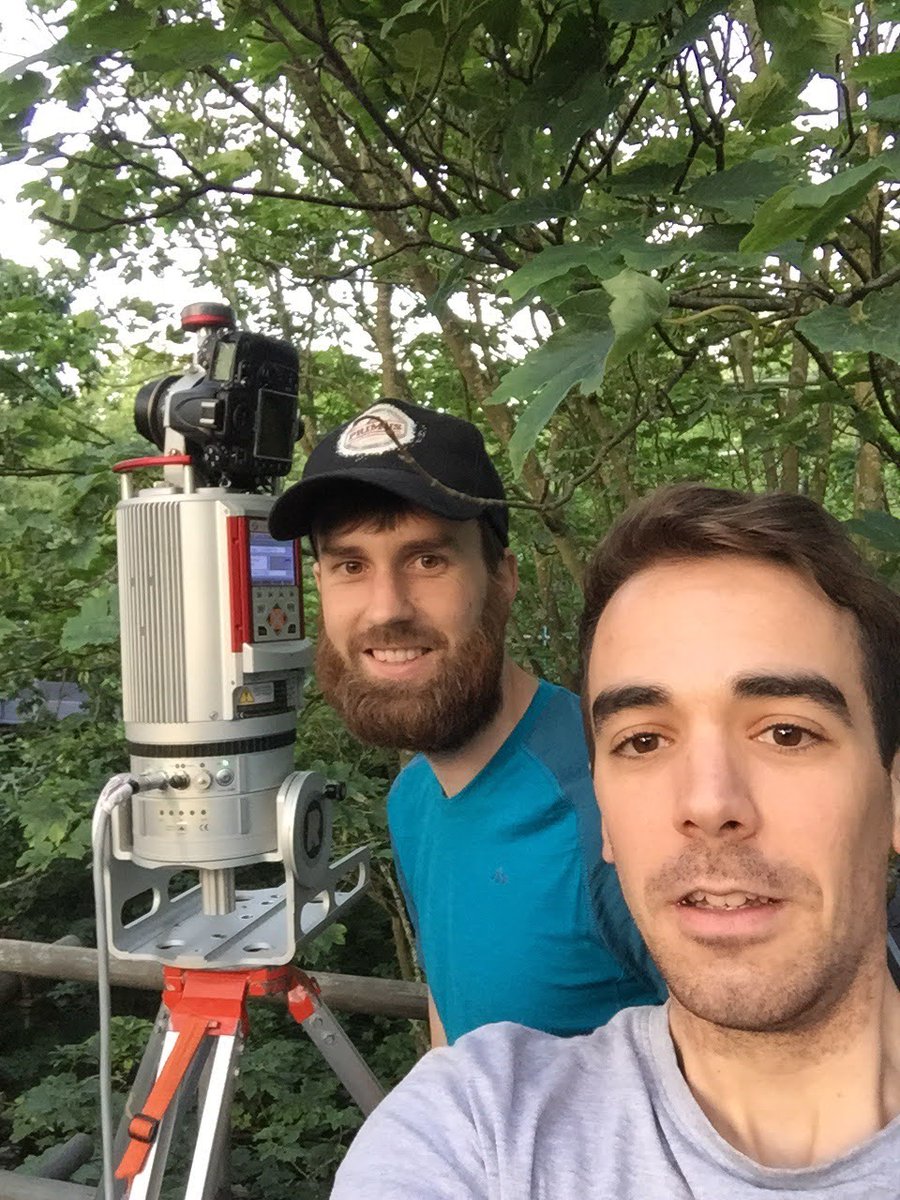
- This work started when I was a postdoc @NPL and @UCLgeography and continued when I moved to @ugent. A great collaboration with fun fieldwork over many years with @mathiasdisney @ymalhi @kungphil @Hans1Verbeeck @InverseTampere @WythamWoods Andy, Pasi, Bob, Niall & Joanne
[9/10]
 ([View Tweet](https://twitter.com/kimcalders/status/1605082146799964160))
- Throughout this journey, we also got to work with Bob Bunce, who was a founding father of some of the allometric models in the UK (and Europe).
The story behind the paper and how we found Bob can be found in our blogpost: https://t.co/pDnEA37yO8
[10/10]
 ([View Tweet](https://twitter.com/kimcalders/status/1605197911234584576))